
Dandelion season has arrived in the Midwestern states, and children’s fondest memories often begin with simple moments. Blowing seeds from a dandelion into the breeze and watching the wind carry them away while making a wish turns this plant into a simple, yet memorable moment, or “wishes on stems!” As you engage in these activities, please ensure that the flowers you pick come from yards or fields that are free from pesticides.
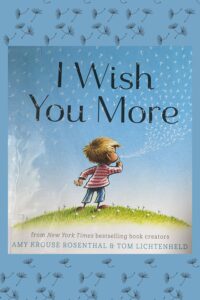 To kick off dandelion season, “I Wish You More” by Amy Krouse Rosenthal & Tom Lichtenheld is a wonderful book to share with children ages 3-6. This charming story introduces figurative language while providing a sweet way to send wishes to friends and teachers at the end of the school year, plus much more. Are you ready to explore? Let’s start with the basics. Here is a beautiful picture of a dandelion plant and its parts. Parts of a Dandelion. This diagram can be displayed near a science area in a classroom or brought outside as children explore dandelions.
1. Read “I Wish You More”: The ideal setting for this playful book is in a field or yard filled with dandelions. Afterward, children can create an “I Wish You More” classroom book or an affirmation jar. Young children may dictate their wishes as teachers model written language. While creating classroom books with friends lends itself to traditional classrooms, the affirmation jar is perfect for homeschool families. Everything you need to get started can be found here: End of the Year Classroom Wishes
2. Dandy Dandelion Hair Do’s: Craft a lion with a mane made of bright yellow flowers, or perhaps a messy ‘bad hair day’ look with dandelions that have gone to seed. Glue the flower heads on the lion’s mane here: Dandy Dandelion Do
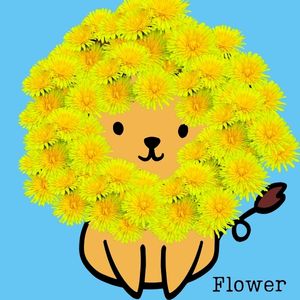
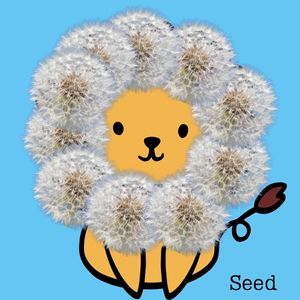
For more advanced fine motor skills, draw a lion’s head on a piece of cardboard with small holes punched through for a lion’s mane. The holes will serve as a perfect holder for stemmed flowers to push through. Make sure to leave long stems on the flowers or seed heads when picking.
3. Figurative Language: In “I Wish You More,” the author uses figurative language such as: “I wish you more __________ than ________.” Create a simple good-and-bad chart for young children to introduce the concept of wishing someone well. For example, “I wish you more sunshine than rain” or “I wish you more rainbows than clouds” are a few ideas to consider. Compile a chart filled with suggestions to inspire young children in crafting their own wishes or affirmations for friends or relatives.
4. Dandelion Clipboard Activity: Have children observe when the dandelions bloom in the grass and how long it takes for them to go to seed. Children could be encouraged to look at the “Parts of a Dandelion” so they can make the connection between the plant on paper with its named parts and the actual plant in nature. Document everything on a Dandy Dandelion Clipboard. Dandelion Clipboard
5. Dandelion Paintbrushes: Use dandelions as paintbrushes to create a masterpiece, or place several dandelion heads in water to make yellow water paint.
6. Dandelion Musical Horn: To create a musical horn, select a thick, long dandelion stem and remove the flower or seed head. Pinch the end of the stem between your fingers to form two flaps. When you blow hard, these flaps will vibrate against each other, producing a horn sound. Experiment with different stem lengths to see how they affect the sound.
7. Dandelion Water Glass: This experiment requires no special equipment. Gather a glass of water and a dandelion seed head still attached to the stem. Observe what happens when the seed head is placed in the water and then removed. Each dandelion seed is connected to a structure resembling a parachute, known as a pappus. This structure is primarily composed of air, and as it moves through the pappus’s bristles, it creates a vortex that pushes air up and down. This fascinating experiment is simple to conduct and has a “wow factor” for children!
8. Dandelion Play-Doh:
Ingredients:
- 1 cup warm water
- 2 cups dandelions
- 2 tablespoons baby oil or vegetable oil
- 2 tablespoons cream of tartar
- ⅓ cup salt
- 2 cups flour
Directions: Blend warm water and dandelions in a blender. Add baby oil, cream of tartar, and salt, mixing until well combined. Incorporate two cups of flour. For freshness, wrap the Play-Doh in plastic wrap and store it in a covered container.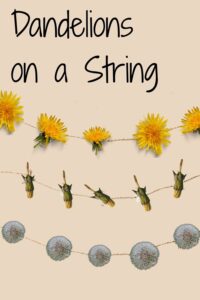
9. Decorative Dandelions on a String: Once the dandelion flowers have bloomed and are beginning to close up, gently snap off the heads from 10–15 spent flowers. Thread these closed flower heads onto 2 or 3 feet of yarn or string. Within a few days, the spent flowers will transform into beautiful puff balls on a string.
10. Dandelion Puff Terrarium: Capture the beauty of a dandelion’s transformation from flower to seed with the following materials:
- Large spent dandelion(s)
- Wide-mouth jar with lid or dome (see photo)
- Scissors
- Decorative stone
- Wire
- Rice
Instructions:
- Cut the flower, leaving a long stem. Insert a wire of the same length as the stem for support, leaving several inches at the bottom.
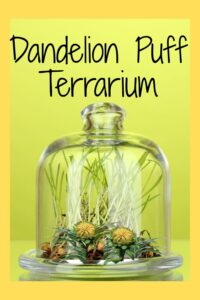
- Wrap the excess wire around a stone to stabilize the flower and keep it upright.
- Decorate the rock for display with moss, grass, stones, or leaves. Sprinkling rice at the base will help control moisture and prevent mold around the flower. Children can also create a fun scene at the base of the rock.
- Place the rock base/display in sunlight and cover it with a jar or decorative lid that children can see through.
- Encourage children to observe how long it takes for the flower to go to seed in this environment compared to its natural habitat.
When dandelions emerge, many people groan about the invasion of these pesky weeds. We often spend a great deal of time and money to rid our yards of these spring weeds. Yet, for educators, it’s like the grand opening of endless hands-on learning opportunities. If you ask any adult today, I bet they can recall the joy of making wishes in the wind with a dandelion gone to seed or perhaps the sticky, yellow residue left from clutching dandelion flowers in their hands and pockets for far too long. What are you waiting for? The dandelions are eager to hear children’s wishes!


